
The Illusion of Simplicity
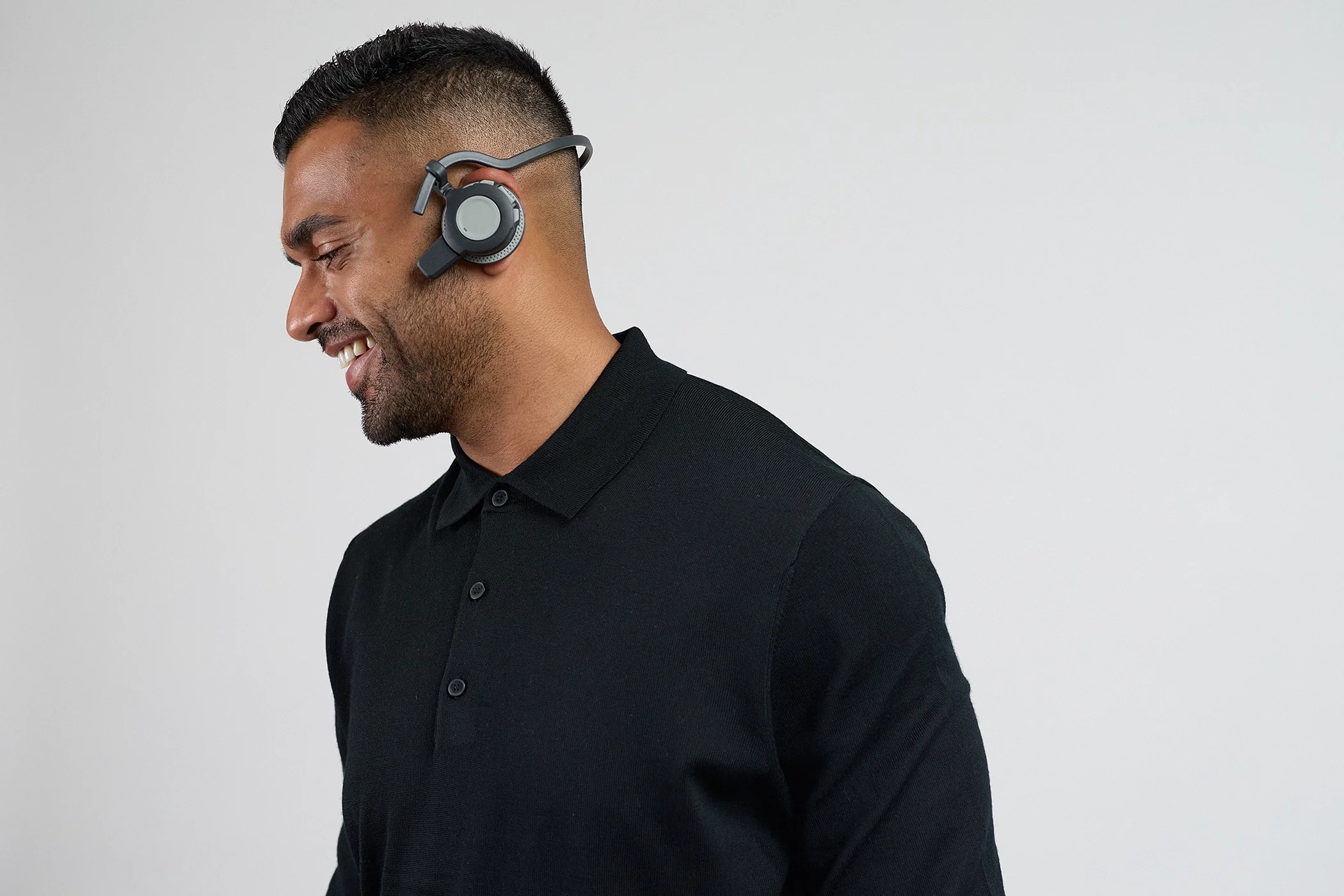
Clean Lighting for Corporate Portraits
The Illusion of Simplicity
One of the comments I hear most often after sharing a studio portrait is, “I love how clean and simple it looks.”
That’s exactly the reaction I’m hoping for.
What most people don’t realise is that creating something that appears simple is rarely a simple process.
Behind every minimalist portrait is a lot of planning, preparation, testing and refinement. The less there is in the frame, the more important every detail becomes. Every shadow has a purpose, every highlight is controlled, and every piece of equipment has been positioned for a reason.
For this particular shoot, the setup wasn’t especially complicated, but everything had a job to do.
A large white seamless backdrop formed the foundation of the image. To camera right, I used a Profoto light fitted with an umbrella as my key light. Positioned slightly higher than the subject and angled down, it gave me a little more contrast and punch while still keeping the light soft enough for a flattering portrait.
On the opposite side was a softer fill light. Its job wasn’t to compete with the key, but simply to lift the shadows and help keep the white background evenly illuminated.
Finally, I had a reflector mounted to a C-stand just below the subject. It’s a simple piece of kit, but it makes a noticeable difference. By bouncing light back underneath the chin and into the lower part of the face, it softens the shadows without making the lighting feel flat or overdone.
When you look at the finished photograph, none of that equipment is visible.
That’s exactly how it should be.
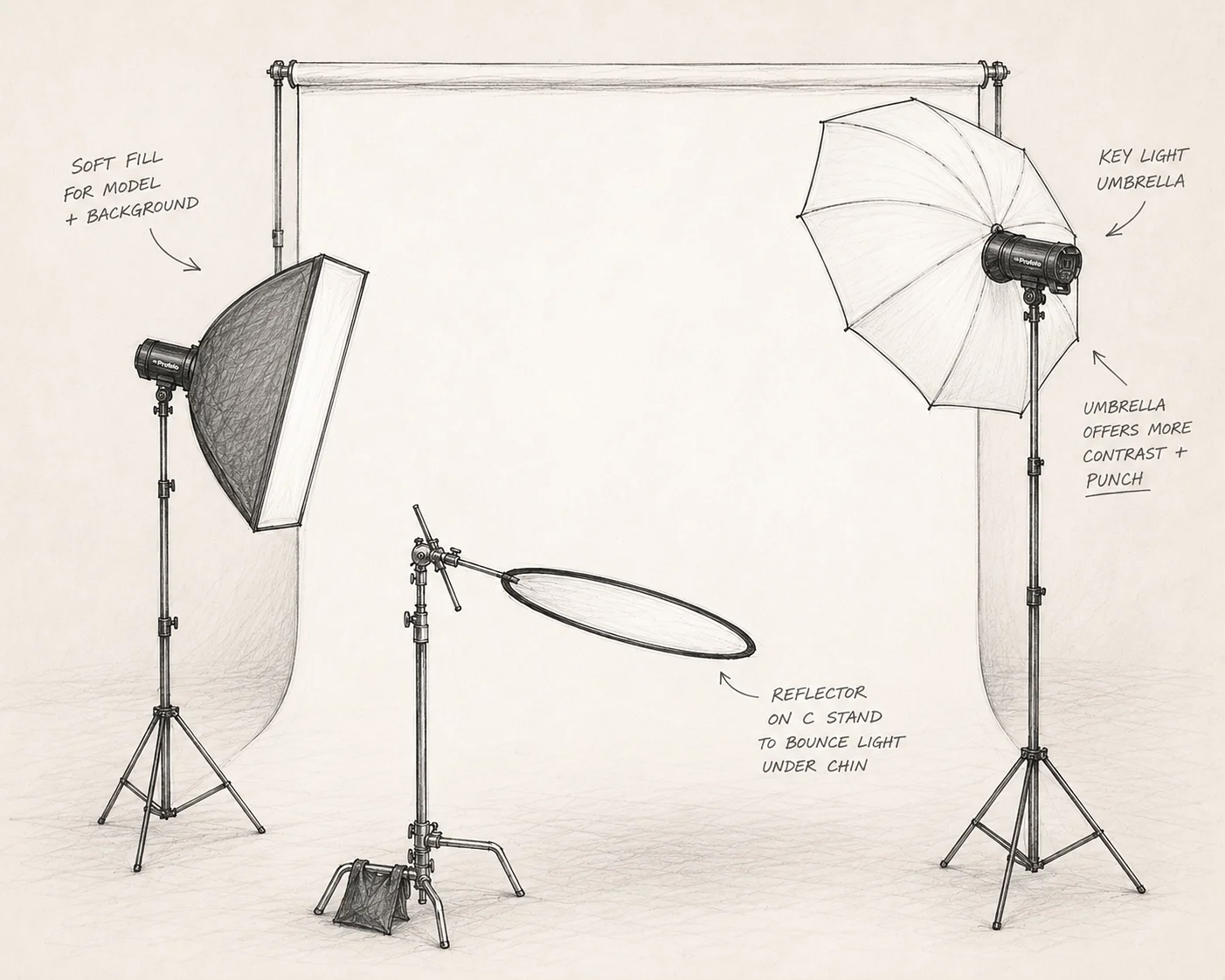
Lighting Layout Behind the Portrait
Simple Is Built, Not Found
The real work happens long before the shutter is pressed.
Every studio session starts with building the scene. The backdrop has to be perfectly clean and tensioned correctly. Light stands are positioned, modifiers attached, heights adjusted, angles tested and power levels balanced. Then comes the cycle every photographer knows well: take a frame, review it, make a small adjustment, shoot again, and repeat.
Sometimes a light moves only a few centimetres.
Sometimes the reflector comes slightly closer.
Sometimes the background needs a fraction more light while the subject needs a fraction less.
These tiny changes are almost invisible individually, but together they transform the final image. Photography is often a game of millimetres rather than metres.
What fascinates me about studio work is how much time is spent refining details that nobody consciously notices. If everything has been done well, the viewer simply experiences the photograph rather than analysing why it works. The lighting feels natural, the subject stands out, and nothing distracts from the image itself.
There's a common misconception that minimal photography requires less effort because there are fewer props, fewer colours and fewer distractions. In reality, it's often the opposite. With a busy scene, imperfections can disappear amongst the detail. In a clean, white studio portrait there's nowhere to hide. Every wrinkle in the backdrop, every unwanted shadow and every inconsistency in the lighting immediately draws attention.
That's why preparation matters.

Hands Showcasing Product Detail

Professional Communication Portrait Session
Preparation Creates Confidence
Taking the extra time to build the lighting properly, checking every angle, and resisting the temptation to rush means the shoot itself becomes smoother and more enjoyable. Instead of constantly fixing problems during the session, you're free to concentrate on the person in front of the camera and capturing genuine expressions.
For me, that's one of the most satisfying parts of photography. The technical work happens quietly in the background, allowing the creative side to take over once everything is in place.
The finished image may only take a fraction of a second to capture, but it's supported by minutes—or sometimes hours—of careful preparation.
So the next time you see a portrait that looks clean, effortless and beautifully simple, remember that simplicity is rarely accidental. More often than not, it's the result of patience, planning, experience and a willingness to keep refining the smallest details until everything finally comes together.
Because in photography, the simplest images are often the ones that take the most work.
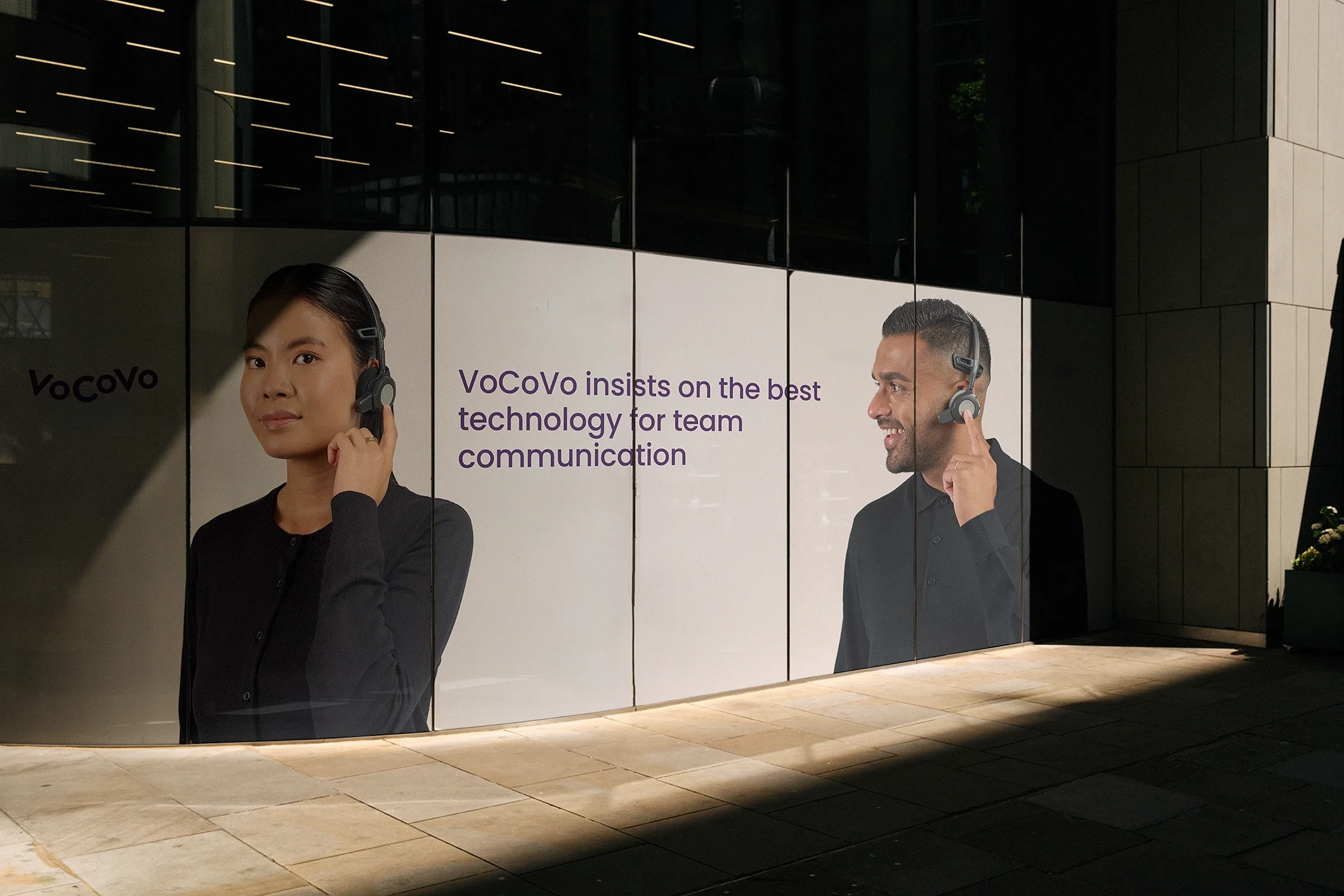
Photography Within Brand Concept