
The Wider Side of Stockholm
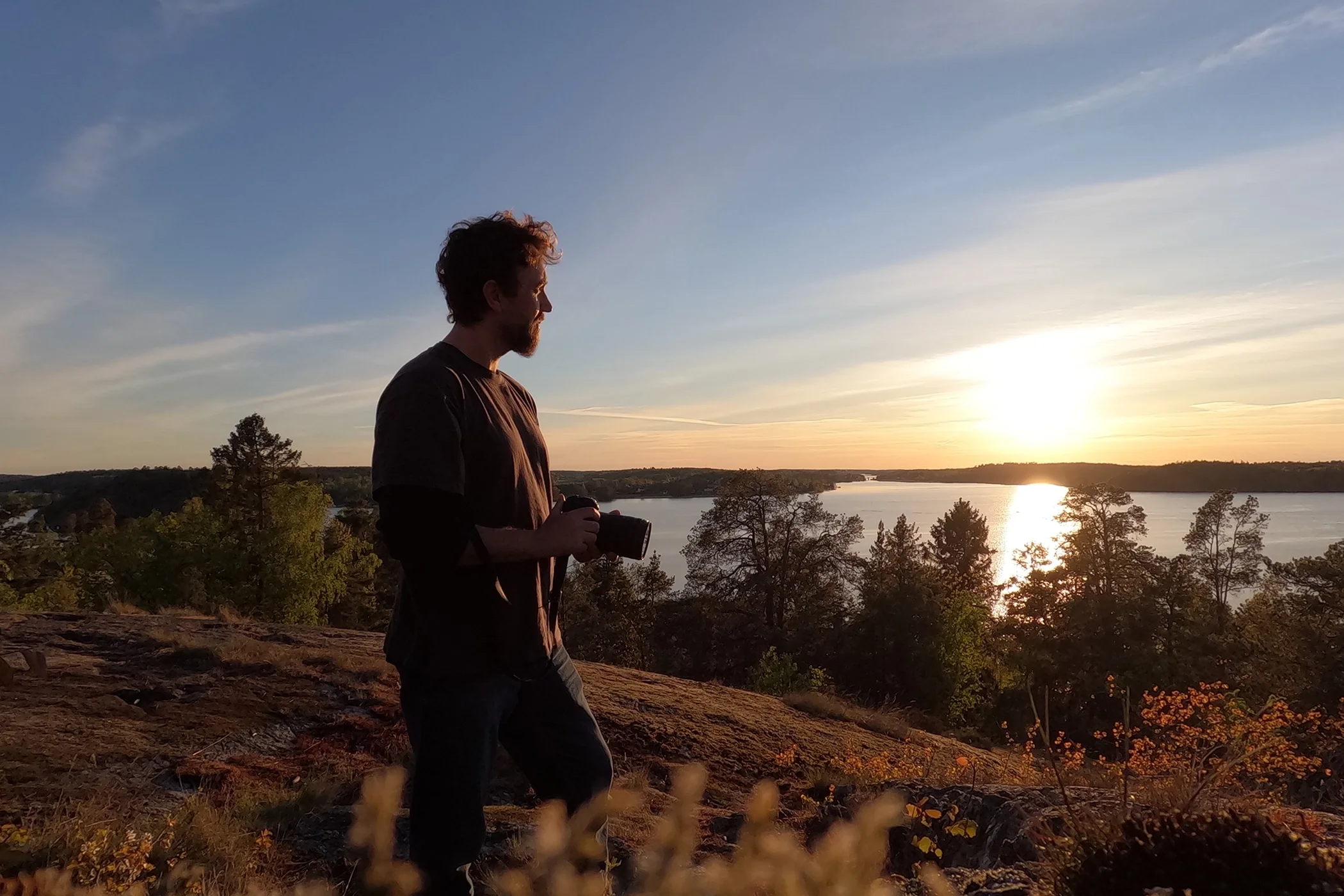
Photographer shooting travel and lifestyle photography in Stockholm 🇸🇪
Introduction: Stockholm Travel Photography with Canon RF 24-70mm
I arrived in Stockholm intentionally shooting with one lens. A lens I’d already half decided I didn’t like. The Canon RF 24-70mm had spent more time sitting on a shelf than in my bag, mostly because I’ve always preferred primes, longer focal lengths, and the separation they bring to my work.
But Stockholm felt different to shoot. The city naturally pulls you wider. Water everywhere, long sight lines, layered streets, ferries cutting through the archipelago, and constant movement between open space and tight detail. The more I walked and photographed, the more I realised the work wasn’t really about isolating subjects anymore. It was about how everything within the frame connected together.
That shift became the starting point for this blog. Not just documenting Stockholm, but documenting how the city slowly changed the way I approached a frame.
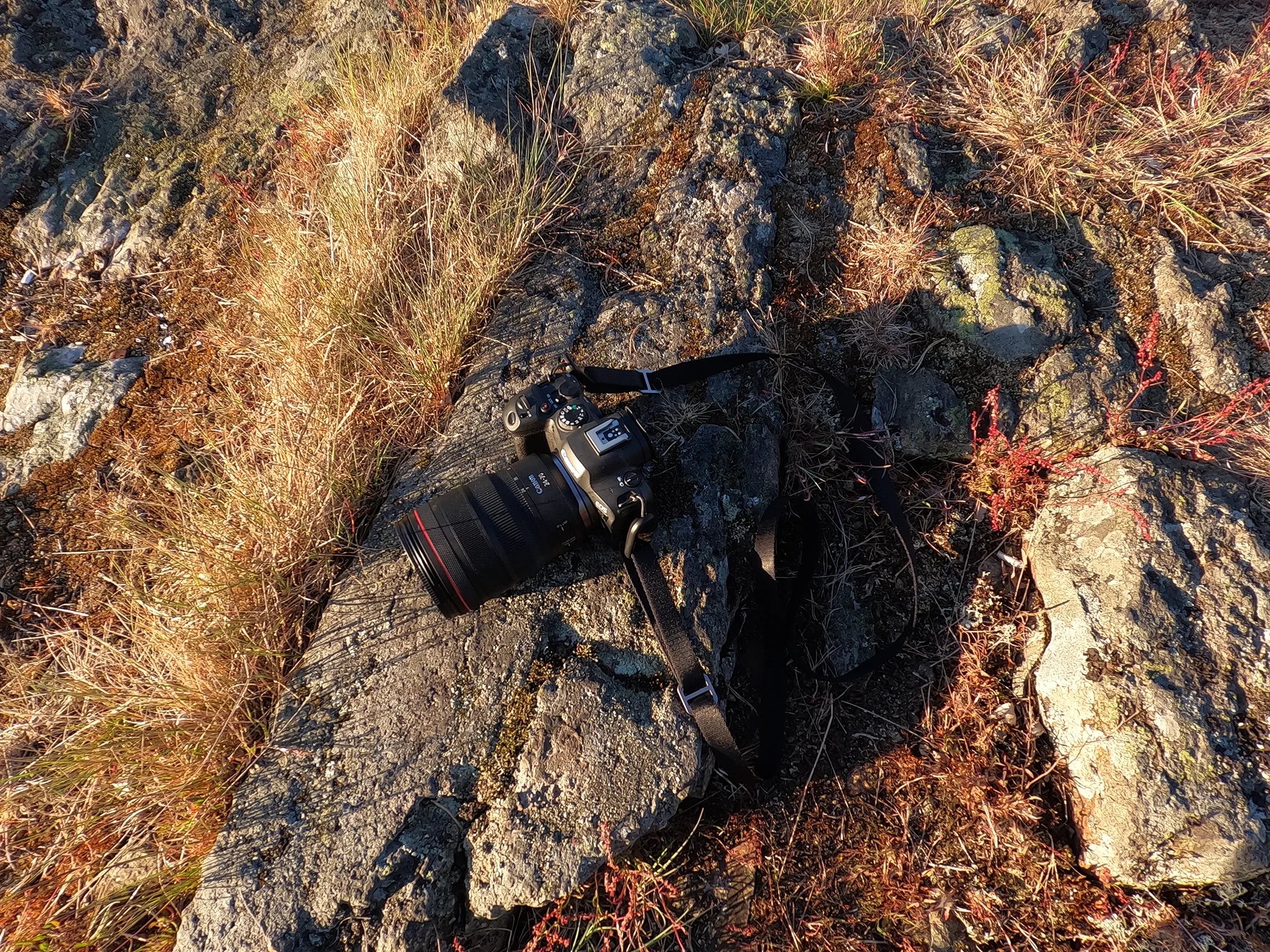
Behind-the-scenes kit shot of a Canon R6 Mark II camera paired with a Canon RF 24-70mm lens
Focus: The Creative Struggle Of The 24mm Focal Length.
Shooting the Canon RF 24-70mm at its widest comes with a set of compromises that are easy to ignore, until you’re actually in the field. At 24mm, the "safety net" of a blurry background disappears. The depth of field expands, flattening the scene and forcing you to find a new way to isolate a subject.
Coming from a background of long primes, this shift was a shock to the system. It wasn't just about framing anymore; it was about maintaining intention in a focal length that desperately wants to include everything. Suddenly, foregrounds and edges weren't just background noise, they were active participants. At 24mm, the lens stops being about the beauty of the blur and starts being about the integrity of the structure.
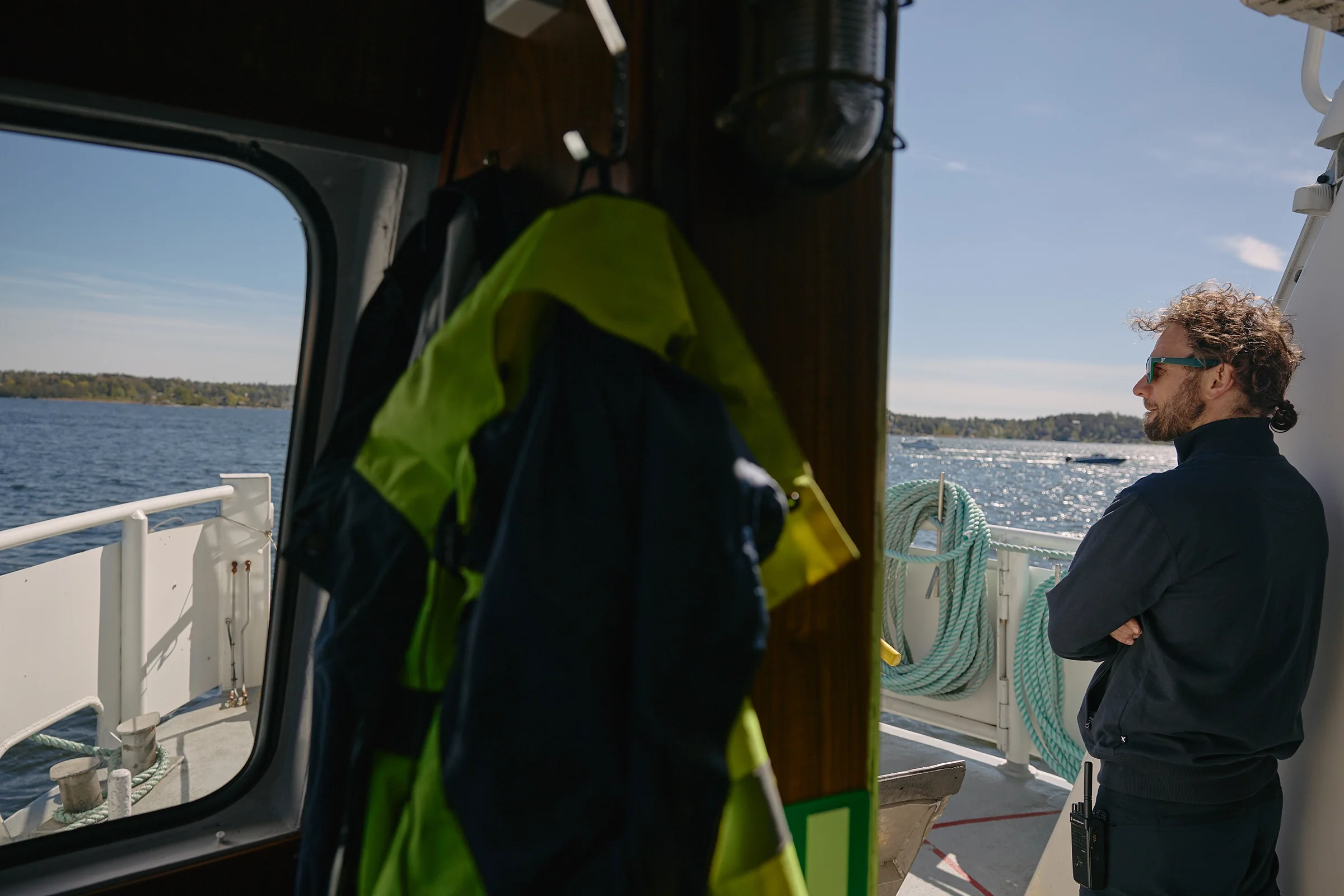
Scandinavian ferry crossing through the Stockholm archipelago captured with a Canon RF 24-70mm
Why Stockholm And Why This Approach
If the creative side is about discipline, the commercial side is about transparency. Most portfolios only show the "hero" shot, but I wanted to pull back the curtain on the process. Choosing Stockholm as a backdrop wasn't just for the aesthetics. It was a deliberate constraint.
In a city defined by sharp architecture and constant movement, there is nowhere to hide. Using the 24-70mm here serves as a real-world stress test for both the gear and my own workflow. For clients, this matters. It shows how I navigate a live, unpredictable environment rather than a controlled studio environment. It’s a demonstration of how I build a story through layering and timing, proving that the final image is a result of deliberate technical decisions, not just a lucky click.
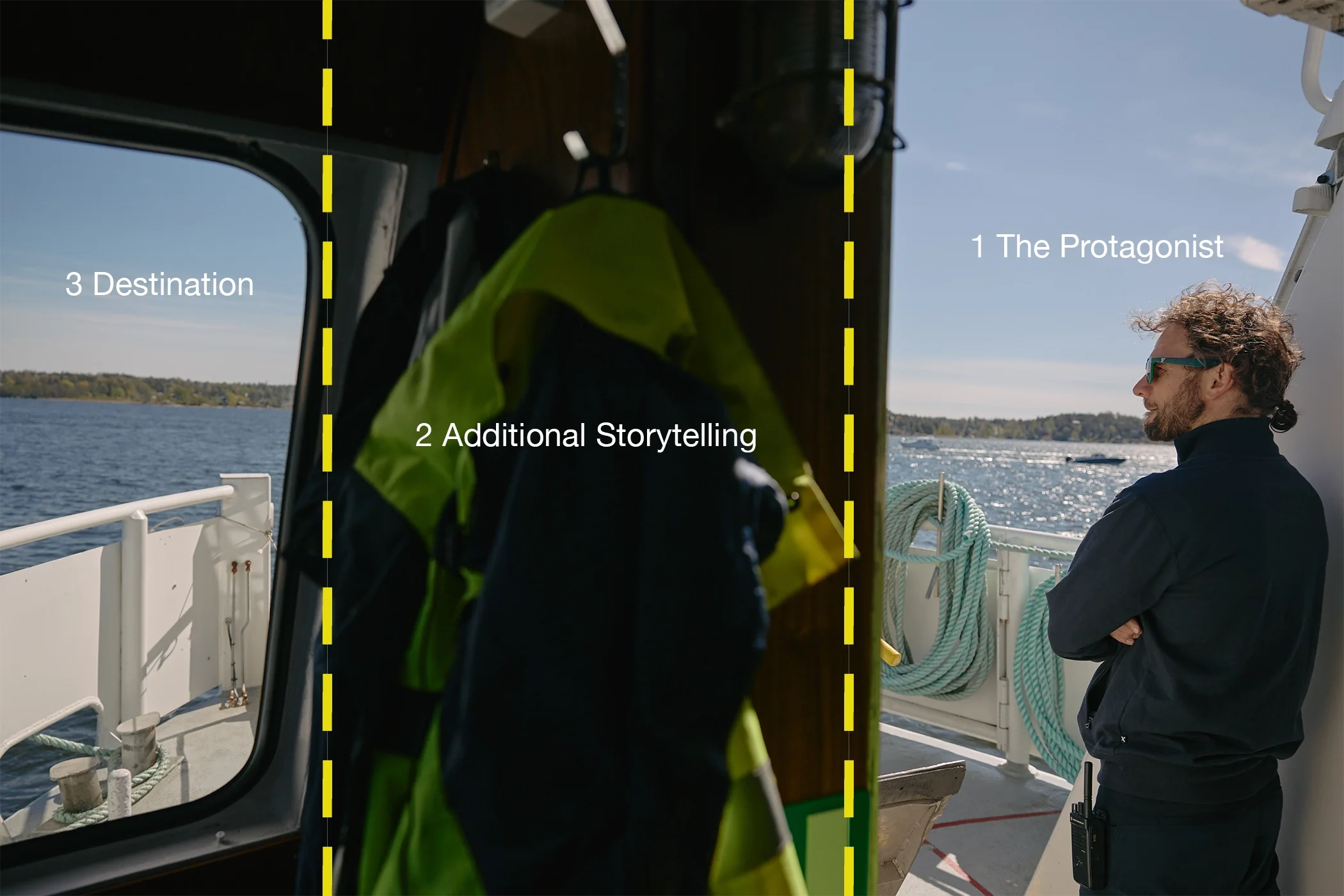
Composition Breakdown 24mm f8 Storytelling
Above annotations show how the foreground, mid-ground and background are being used deliberately rather than left to chance. Instead of relying on shallow depth of field to isolate a subject, the structure of the scene is doing the work. Lines, framing devices and spatial relationships become the tools that lead the viewer through the image.
Marking it out also shows intent. It demonstrates that what might look like a casual travel moment is actually a controlled composition built around flow and direction. At f8, sharpness across the frame supports that approach, allowing every layer to carry information rather than dropping it away. The result is less about a single subject and more about how multiple elements connect into one visual narrative.
Letting the Landscape Take Over: From Postcard to Real Scene
As the set developed, so did my thinking about what I was actually trying to capture. At the start I was still chasing the obvious frames, the clean sunset over water, the classic colourful Stockholm scenes that feel like they should exist in every travel set. But that approach started to feel a bit thin once I was actually out shooting. The wider lens naturally pushed things away from that idea and towards something more about scale, context and how the place actually sits in front of you.
That shift carries into this next image, which on paper could easily slip into cliché. A low sun sitting just above a small cabin roof, warm light, clean subject, very “Scandi sunset”. But it only works because of everything else in the frame. Blossom and evergreen trees take up a huge part of the composition and stop it from being a simple postcard shot. The cabin is still there, but it is sitting inside the landscape rather than being isolated from it.
It ends up being less about a perfect sunset and more about how quickly a familiar scene changes once you stop treating it as a standalone subject.
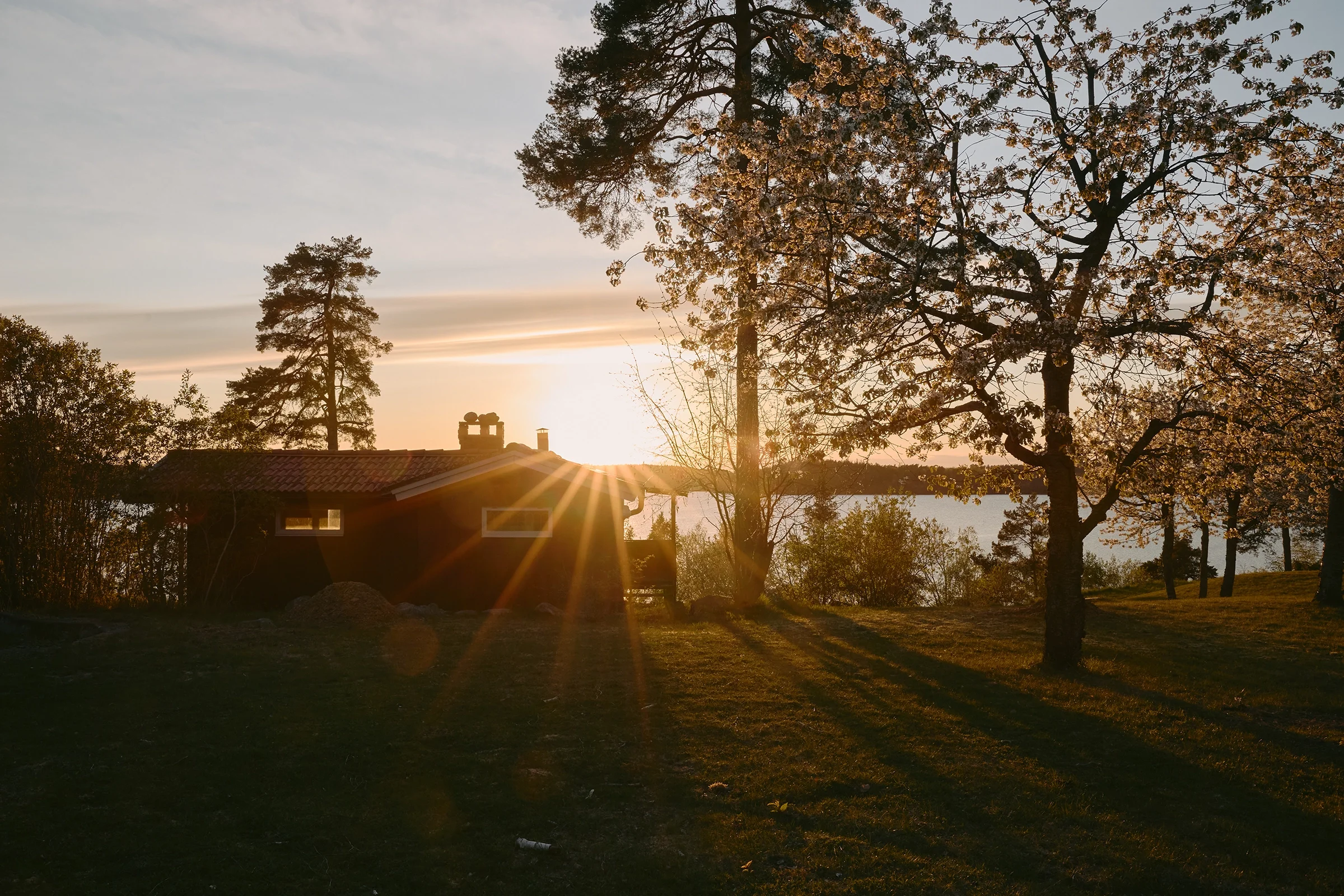
Scandi sunset photographed with the Canon RF 24-70mm lens
Framed by Water and Light: Wide Composition and Scale
The next image is built around restraint rather than emphasis. The two sunbathers sit pushed right to the edge of the composition, taking up only a small part of the image, almost like a detail rather than the subject. Everything else is given over to water, the fading sunset and a line of forest sitting quietly in the background.
It would have been easy to step in closer and make them the obvious focus, but that would have changed the feel of the scene completely. Keeping distance with the 24mm frame allows the environment to carry just as much weight as the people within it. The image becomes less about individuals and more about how small they are within a much larger space.
The negative space is doing a lot of the work here. It isn’t empty, it’s active in how it holds the light and gives the frame balance. The subjects don’t interrupt the scene, they sit inside it, which is what makes the composition feel calm rather than forced.
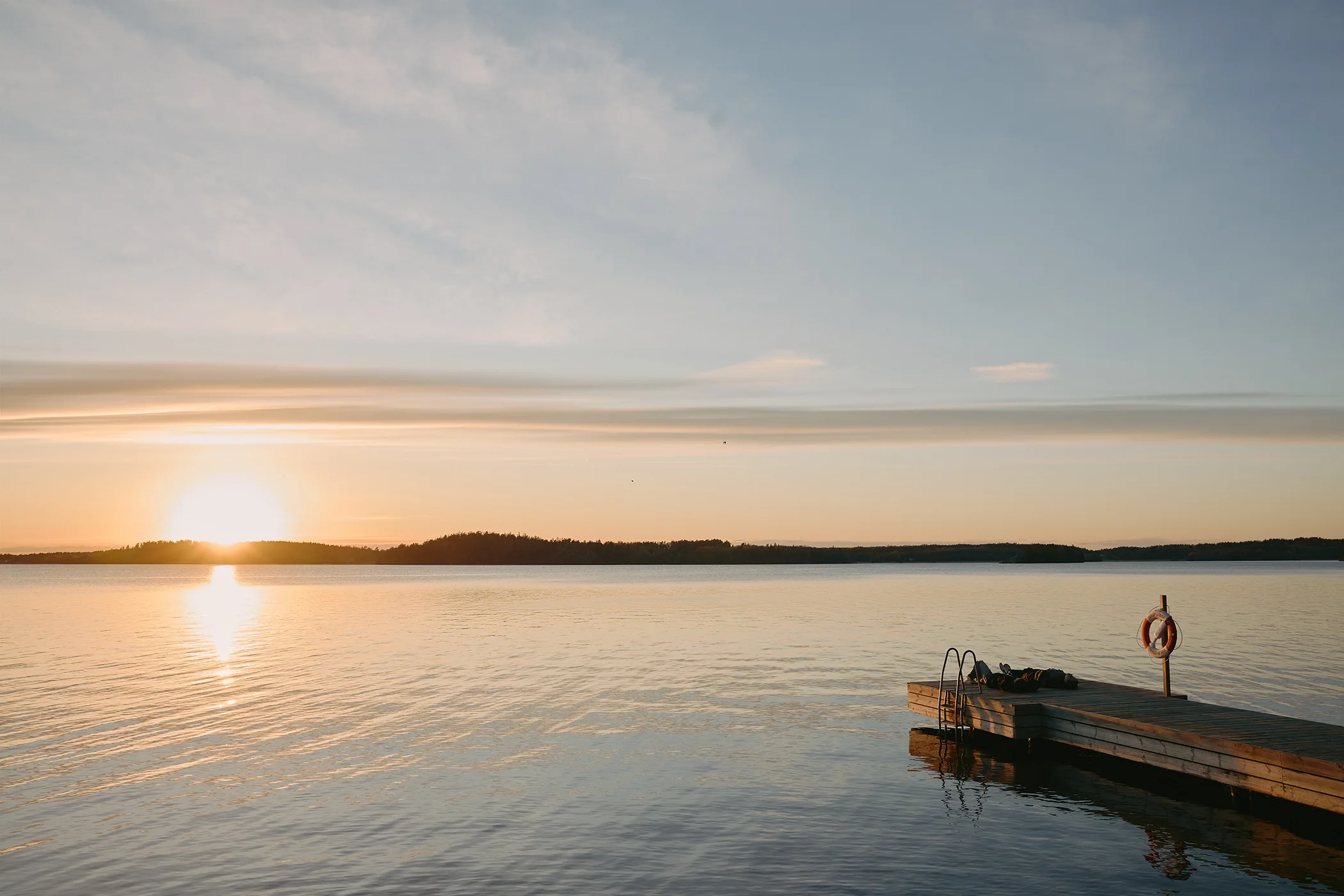
Framed by water and light – figures in Swedish Coastal Sunset
Reactiveness in the Field: Working with Light and Movement
There is a real freedom that comes with working reactively. In Stockholm, I moved away from planning every frame and started responding to what was actually in front of me, letting light, weather and movement decide where to shoot.
Being reactive in photography is about constant adjustment. You read a scene as it changes, from shifting light on water to people moving through space, and make decisions in the moment rather than sticking to a fixed idea.
With a 24–70mm, that becomes even more important. You can move from wide context to tighter detail instantly, which means the composition is always evolving as you shoot.
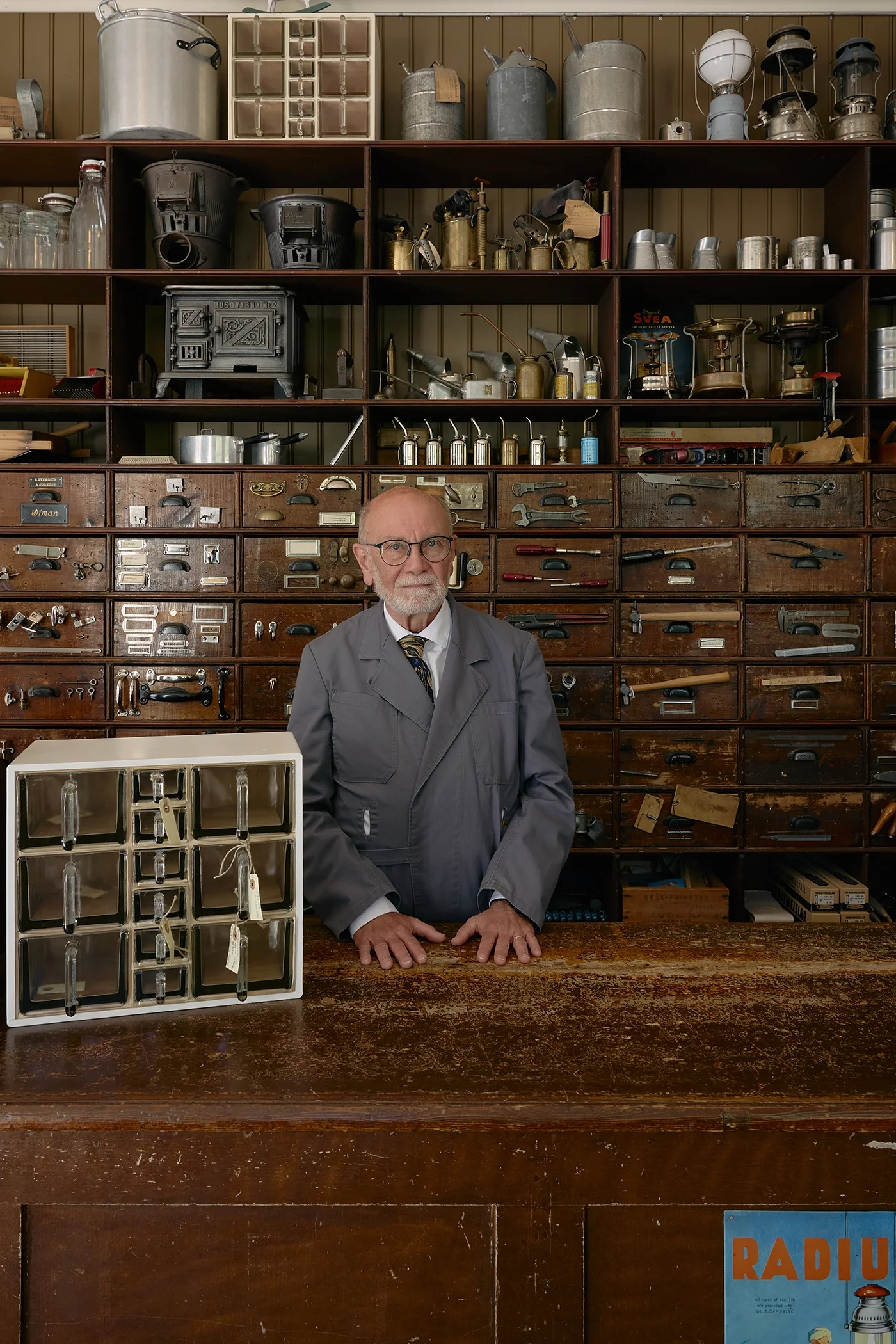
Environmental side portrait placing the subject within their space, where detail and context carry as much weight as presence.
Commercial Photography Translation: From Travel to Client Work
How does a blog about Sweden translate into commercial photography? For me, the link is pretty direct. Clients are not just paying for technically clean images, they are paying for how you see and interpret a space.
Shooting in Stockholm pushed me into a more reactive way of working. Instead of arriving with a fixed shot list, I started reading environments properly, looking for angles, light and moments that aren’t obvious at first glance. That approach carries straight into commercial work, where briefs are often tighter than the reality on the ground.
It also changes how you work under pressure. Shooting daily in unfamiliar locations builds speed and decision making. You learn to commit to a frame quickly, adapt when something shifts, and keep the standard consistent without overthinking every choice.
That approach has shifted how I think about commercial photography more broadly. Rather than isolating a subject or moment, I’m more interested in how everything sits within the frame. The environment is never just background, it carries equal weight in shaping the image. Whether it’s people, places or details within a scene, I’m more focused on building frames where context is doing as much work as the subject itself. It’s a more environmental way of seeing, but it feels closer to how I actually shoot now.